
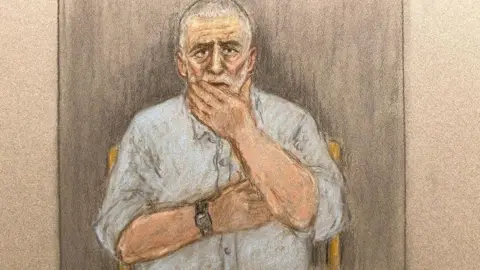
Considering he who's forfeited approximately 40 years of his life due to a crime he had no involvement in, Peter Sullivan maintains a unusually hopeful tone.
In our conversation last month, for what was his initial media appearance since being freed from prison in May, he was enthusiastic and looking forward to getting to Anfield to watch Liverpool play for the opening match since he was arrested in 1986.
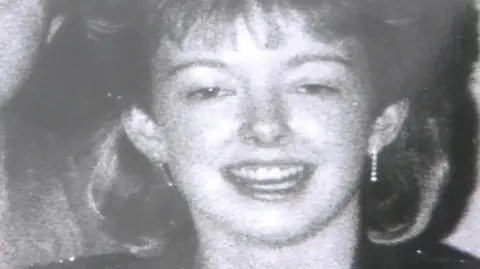
That was the year of the violent killing of Diane Sindall in his home town of Birkenhead - an occurrence he said he only knew about because someone turned to him in a pub at the time and said, "reportedly there's been a murder".
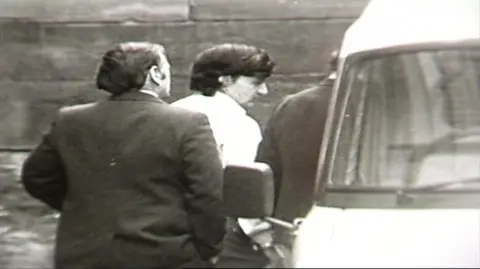
When he was found guilty the following year at Liverpool Crown Court - he was sentenced to a lifetime in some of Britain's toughest category A prisons where he would be tormented by his tabloid nicknames "The Wirral Predator", "The Mersey Ripper" and "Nocturnal Predator".
Adjusting to a Digital World
Prior to our discussion, he was abundant with tales about how since his freedom he has had to acclimate to a radically changed world.
When he was arrested, Margaret Thatcher was in Downing Street, the concept of the internet and Europe was still separated by the Iron Curtain.
He explained watching the demolition of the Berlin Wall from a public television in prison.
Mr Sullivan explained how trips to the shops now show how "the world has transformed" - from trying to figure out how self-checkouts function to realising that "in place of having a cheque book, you've got it on your phone".
Modern Surprises
His incarceration means he has been unaware of the way so many facets of everyday life have transformed - comparable to someone who has been asleep since the 1980s.
"Having endured so long in prison and finding out there's no DHSS [Department of Health and Social Security, now the Department for Work and Pensions (DWP)] where you can pick up your money - you're thinking, 'Amazing, what's going on here?'"
He now has a smartphone, after discovering doctor's appointments need to be scheduled on something he now knows is called an 'app'.
He first became knowledgeable about them when he was riding on a bus shortly after his freedom and saw people operating smartphones. He only realised they were phones when he saw someone put one to their ear.
Psychological Effects
Mr Sullivan's 14,000 days in custody have also led to an inevitable sense of institutionalisation.
He described how after his release, one morning in his flat he walked back to his bedroom and sat down on his bed, because he was automatically waiting for a prison officer to come and confine him into his cell.
"It's required to be at your door at a designated moment, otherwise the officers will yell at you", he said.
"I was just sitting there thinking, 'What's happening?'"
Demanding Closure
But Mr Sullivan's optimism is tempered by a desire for answers about how he ended up being charged with an notorious murder that he didn't commit, and a perplexity about why he still has not had an apology.
"Everything is gone", he said.
"I lost all my freedom, I lost my mother since I've been in prison, I've lost my father.
"It hurts because I couldn't be present for them", he said.
"I cannot proceed with my life if I can't get an response off them."
"That's all I want, an apology [and to understand] the cause behind they've done this to me", he said.
Police Position
Merseyside Police said "limited value to be gained for a re-examination of this matter today" because of "the changes to investigative techniques and developments in the law over the last 40 years".
The force did submit some of Mr Sullivan's allegations to the police regulatory agency, the Independent Office for Police Conduct (IOPC), who will now investigate his claims that officers physically abused him and intimidated to link him to other crimes if he didn't plead guilty to Diane Sindall's murder.
When asked if it would express regret, the force did not clearly address the question, but as part of a comprehensive declaration it said: "The force recognizes that there has been a significant injustice of justice in this case".
Moving Forward
Mr Sullivan shared about his simple goal - an ambition that he said he had given up of being able to achieve at some points over his approximately 38 years behind bars.
"All I want to do now is proceed with my own life and progress as I was before, and live my time out now".
His future may be made more manageable by government compensation, paid to victims of miscarriages of justice.
This system is limited at £1.3m, a maximum which it is estimated his eventual payout will get very approach.
But the process is not guaranteed, and it is time-consuming.
Andrew Malkinson, whose sentence for a rape he had no involvement in was quashed in 2023, was only granted an temporary payment earlier this year.
Guilty prisoners who confess to their crimes and are paroled get a place to live and some help with living expenses. Mr Sullivan, as an exonerated person, is not entitled to that help.
And so he is surviving a basic lifestyle, with his modest ambitions - although many think he is a compensation recipient.
His attorney, Sarah Myatt, said "no sum that you could say that would be adequate for forfeiting 38 years of your life".


